


Blog 1: Gears
- Nov 18, 2023
- 4 min read
Updated: Nov 28, 2023
Gears Documentation Blog Entry
In this page, I will describe:
The definition of gear module, pitch circular diameter and the relationship between gear module, pitch circular diameter and number of teeth.
The relationship between gear ratio (speed ratio) and output speed, between gear ratio and torque for a pair of gears.
How I can design a better hand-squeezed fan, including the sketches
How my practical team arranged the gears provided in the practical to raise the water bottle, consisting of:
Calculation of the gear ratio (speed ratio)
The photo of the actual gear layout.
Calculation of the number of revolutions required to rotate the crank handle.
My Learning reflection on the gears activities.
What is Gear Module?
Refers to the size of the gear teeth
Unit of gear module is mm
The larger the gear module, the larger the size of the teeth
What is Pitch Circular Diameter?
Refers to the imaginary circle that passes through the contact point between the two meshing gears.
Represents the diameters of two friction rollers in contact and moves at the same linear velocity.
What is the relationship between gear module, pitch circular diameter and number of teeth?

The gear module of a gear is the ratio of the pitch circular diameter to the number of teeth the gear has.
What is the relationship between gear ratio (speed ratio) and output speed for a pair of gears?
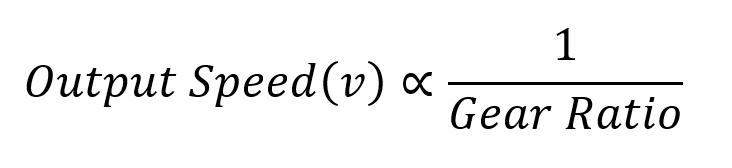
The output speed of a pair of gears is inversely proportional to the gear ratio.
As the gear ratio decreases, the output speed of the follower gear will increase.
What is the relationship between gear ratio and torque for a pair of gears?

The torque is directly proportional to the gear ratio
As the gear ratio increases, the torque experienced by the follower gear increases.
This is one of the proposed designs to make the hand-squeezed fan better:

Below are the description on how my practical team arranged the gears provided in the practical to raise the water bottle.
Calculation of the gear ratio (speed ratio).
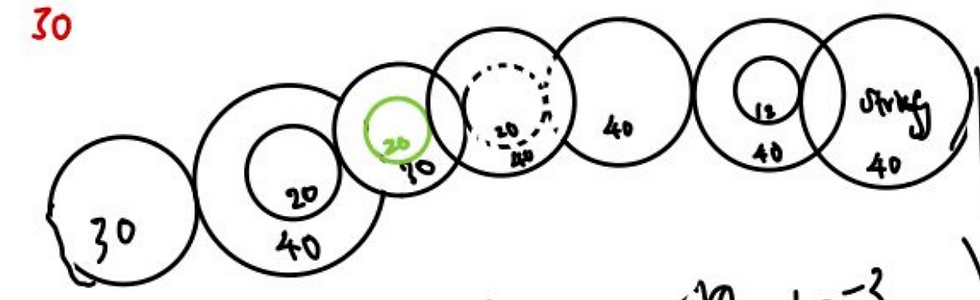

2. Photo of the actual gear layout.

3. Calculation of the number of revolutions required to rotate the crank handle.

My Learning Reflection on the gears activities
Before the lesson of gears, I did not really think much about gears and what they did for us. I really just thought of them being round spiky objects that can help us move heavy items for efficiently. Before the practical lesson, I had to go through the 4 youtube videos posted on Brightspace which gave me new insight on the world of gears. The videos taught me to how to calculate the gear ratio for both simple gear trains and compound gear trains. In addition, the videos taught me how torque and speed related to gear ratio which allowed me to apply my knowledge of moments from secondary school into this to allow me to understand the concept better.
During the practical lesson, my team faced many challenges such as assembling the compound gear train to achieve the highest gear ratio of 26.667. We approached the problem by mixing up the gears and see if the calculation of the gear ratio will achieve 26.667. Looking back, this was very ineffective and ineffcient as the probability of getting the gear ratio we wanted was very low. We should have tried a different method of getting the desired gear ratio sooner. We decided to approach this problem in another direction by noticing the patterns that will give us the highest the gear ratio. I quickly noticed that for the gear ratio to be highest, all the individual gear ratios in the calculation needs to be more than or equal to 1. The individual gear ratio has to be more than 1 so that the gear ratio will appear to increase. After a couple more tries, we got the gear ratio of 13.333 which is just half of the answer which was 26.667. We noticed that we increase our gear ratio by just a factor of 2 to achieve the desired value and that one of our compound gear was being wasted as a idler gear. We made some adjustments and got the desired gear ratio.
Looking back, there were a couple of instances we had done well and some instances we can improve on. One of the instances that was done well was the observation of the individual gear ratios being more than 1 as that allowed us to successfully complete the activity. In addition, this experience that be also linked to one of the modules we are going through which is PSCCT (Problem Solving with Creative and Computational Thinking). This experience can be linked to the term of pattern recognition as it refers to looking for similarities among sub-problems which can help us to solve a complex problem more efficiently. A complex problem being finding the desired gear ratio and a sub-problem being the individual gear ratio being less than 1. In the future, I will want to try to make it habit to use this certain skill more as it has helped my team to finish the practical.
One of the instances that I should learn from is time management as for my team, we did not have enough time to put our gears into test and to lift the water bottle. Even though we decided to split ourselves into two to focus on the 2 activities at the same time which is efficient but it is not really effective as activity was more demanding as compared to activity 2. From this experience, I will manage my team and learn from this mistake so that I will not repeat the same mistake for Practical 2 Arduino Programming.
In essence, I had a good time in doing this gear activity and I feel I am able to apply some of this in my project confidently.
See you in Blog 2(Arduino Programming)!


Comments